How to Make a Monthly Budget: A Simple Guide
Learn how to make a monthly budget the simple way: understand your take-home pay, split your money into a few buckets, and automate your saving first.
Quick answer
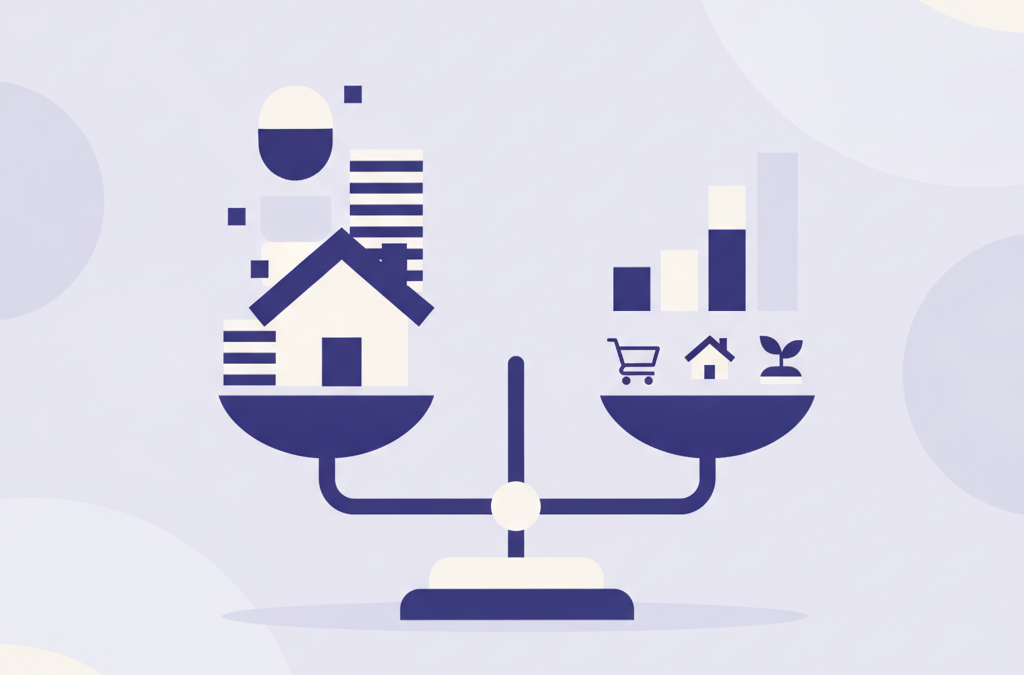
To make a monthly budget, start with your take-home pay, review recent spending, then divide your income into a few broad buckets for needs, wants, and saving. Fund saving first by automating a transfer just after payday, and check in briefly each week. General information, not advice.
A budget has a reputation for being tedious, restrictive, and vaguely joyless. In reality, a simple monthly budget is one of the most liberating tools in personal finance, because it replaces anxiety and guesswork with clarity. Instead of reaching the end of the month wondering where your money went, you decide in advance where it will go. This guide walks through how to make a monthly budget from scratch, without spreadsheets full of intimidating detail, keeping it a simple budget you will actually stick with.
This is general educational information rather than personalized advice. There is no single correct budget, because incomes, costs, and priorities differ from person to person. Treat what follows as a flexible method to adapt to your own life.
What is a budget, really?
At its simplest, a budget is a plan for your money. It is you deciding, before the month begins, how your income will be divided among the things you need, the things you want, and the future you are saving for. That is the whole idea. Everything else is just detail about how to do it in a way that fits your life.
The crucial shift a budget creates is from reacting to directing. Without a plan, spending tends to happen by default, shaped by habit and impulse, and saving becomes whatever happens to be left over, which is often little. With a plan, you direct your money on purpose, and saving becomes something you decide in advance rather than hope for at the end.
Why bother budgeting at all?
People sometimes assume budgets are only for those who are struggling, but that is a misunderstanding. A budget is valuable at any income level, because the question it answers, are your money and your priorities aligned, matters regardless of how much you earn. Higher earners can leak money just as easily as anyone else; they simply do it on a larger scale.
A good budget reduces financial stress, because you always know where you stand. It makes saving reliable rather than accidental. It helps you spot spending that does not actually add much to your life, freeing that money for things that do. And it gives your goals a fighting chance, because it ensures money is deliberately set aside for them. In short, budgeting is less about restriction and more about intention.
How do you start building one?
The foundation of any budget is knowing two numbers: what comes in and what goes out. Start with your income, and specifically your take-home pay, the amount that actually reaches your account after taxes and deductions. Budgeting around this net figure, rather than your headline salary, keeps your plan grounded in money you truly have. This point is emphasised in our personal finance basics guide for good reason, because planning around gross pay is a classic beginner error.
Next, get a clear picture of your spending. Look back over a recent month or two and note where your money went. Many people are surprised by what they find, because small, frequent purchases add up quietly. You do not need perfect precision; a reasonably honest overview is enough to work with. The goal at this stage is simply to see reality clearly before you try to reshape it.
How should you divide your money?
Once you know your income and your spending, the next step is to divide your money into categories. A popular and beginner-friendly approach is to use just three broad buckets rather than a long list of fine-grained ones.
- Needs: the essentials you cannot easily avoid, such as housing, basic food, utilities, transport, and minimum debt payments.
- Wants: the discretionary things that make life enjoyable but are not strictly necessary, like dining out, entertainment, and hobbies.
- Saving and debt repayment: the portion directed toward your future, including building savings, funding goals, and paying down debt beyond the minimums.
One well-known version suggests splitting take-home pay roughly across these three, but the exact proportions matter far less than the act of dividing deliberately. If your essentials take up a large share, your split will look different, and that is fine. The framework is a starting point to adjust, not a rule to obey.
How do you make saving actually happen?
The most common budgeting mistake is treating saving as whatever is left over at the end of the month. In practice, very little tends to be left, because spending expands to fill the available money. The fix is to reverse the order: treat saving as a priority you fund first, not a leftover you hope for.
The most reliable way to do this is to automate it. Set up an automatic transfer into your savings, timed for just after you are paid, so the money is moved before you have a chance to spend it. This approach, sometimes described as paying yourself first, quietly guarantees that saving happens without depending on willpower each month. It is one of the highest-impact habits in all of budgeting.
How do you track spending without it taking over your life?
A budget only works if you occasionally compare your actual spending against your plan. The good news is this does not have to be an exhausting daily chore. A quick check every week or two, glancing at whether you are on track in each bucket, is enough for most people to stay aware and catch problems early.
You can track in whatever way suits you: a simple note on your phone, a basic spreadsheet, an app, or even a periodic look at your bank statement. The best method is the one you will actually keep using. The aim is not perfect accounting but ongoing awareness, a general sense of whether your money is flowing the way you intended. If a category regularly overshoots, that is useful information rather than a failure.
What do you do when the budget does not balance?
Sometimes you will draw up a budget and find the numbers do not add up, with more going out than coming in. This is uncomfortable but valuable, because it reveals a problem that was there whether you looked at it or not. You now have a clear picture to work from, and two broad levers to pull.
The first lever is spending, particularly in the wants category, where there is usually more flexibility than in essentials. The second is income, though that is often harder to change quickly. Reviewing your essentials for any that could be reduced over time, such as recurring subscriptions you no longer use, can also help. The point is not to feel defeated but to treat the budget as a diagnostic tool that shows you exactly where to focus.
How do you keep the habit going?
A budget is not a one-time exercise but a routine that works best when it is light and sustainable. Build in a brief monthly moment to review the past month and set up the next one. Keep the categories simple enough that maintaining them does not feel like a burden. And adjust the plan as your life changes, because a budget that no longer reflects reality will quietly be abandoned.
Above all, aim for consistency rather than perfection. You will have months where you overspend or forget to track for a while, and that is normal. What matters is returning to the plan rather than giving up on it. A simple budget followed imperfectly for years beats an elaborate one abandoned after a month.
What is the takeaway?
A simple monthly budget is just a deliberate plan for your take-home pay, dividing it among needs, wants, and saving, with saving funded first through automation. Start by understanding your income and spending, divide your money into a few broad buckets, automate your saving, and check in periodically without obsessing. When the numbers do not balance, treat the budget as a helpful diagnostic rather than a verdict. Kept simple and consistent, it turns money from a source of stress into a tool you control. As always, this is general information, not advice for your specific circumstances.
Frequently asked questions
What is the simplest way to start a budget?
Begin by learning two numbers: your take-home pay and where your money currently goes. Look back over a recent month or two to see your real spending, then divide your income into a few broad buckets. You do not need perfect precision, just an honest overview to work from.
Should I budget with my gross or take-home pay?
Budget with your take-home pay, the amount that actually reaches your account after taxes and deductions. Planning around your headline salary assumes money you never receive and is a common beginner mistake. Grounding the plan in net income keeps it realistic.
What is the needs, wants, and savings approach?
It is a beginner-friendly method that divides take-home pay into three broad buckets: needs like housing and utilities, wants like entertainment, and saving or debt repayment for your future. The exact proportions matter less than dividing your money deliberately rather than by default.
How do I make sure I actually save?
Treat saving as a priority you fund first, not a leftover you hope for. Automate a transfer into savings timed for just after you are paid, so the money moves before you can spend it. This pay-yourself-first habit makes saving reliable without depending on willpower.
What if my budget does not balance?
That is useful information rather than a failure. It reveals a gap that existed whether you looked or not. Review your discretionary wants for flexibility, check essentials like unused subscriptions, and consider income over time. Treat the budget as a diagnostic tool showing you where to focus.
Related

How Much Water Should You Drink a Day?
How much water should you drink a day? There is no single number: needs vary with body, activity, climate and diet, and…

How to Plan a Trip: A Step-by-Step Guide for Any Destination
Learn how to plan a trip step by step, from setting your purpose and budget to booking flights, checking documents, and building…

Why Do Most Small Businesses Fail in Year One?
Why do small businesses fail? Usually a few preventable causes: running out of cash, no real demand, weak pricing, and burnout. Learn…