Sole Proprietorship vs LLC: How to Choose for a New Business
Sole proprietorship vs LLC: the sole proprietor route is simplest and cheapest, while an LLC adds liability protection. Learn the trade-offs before you choose.
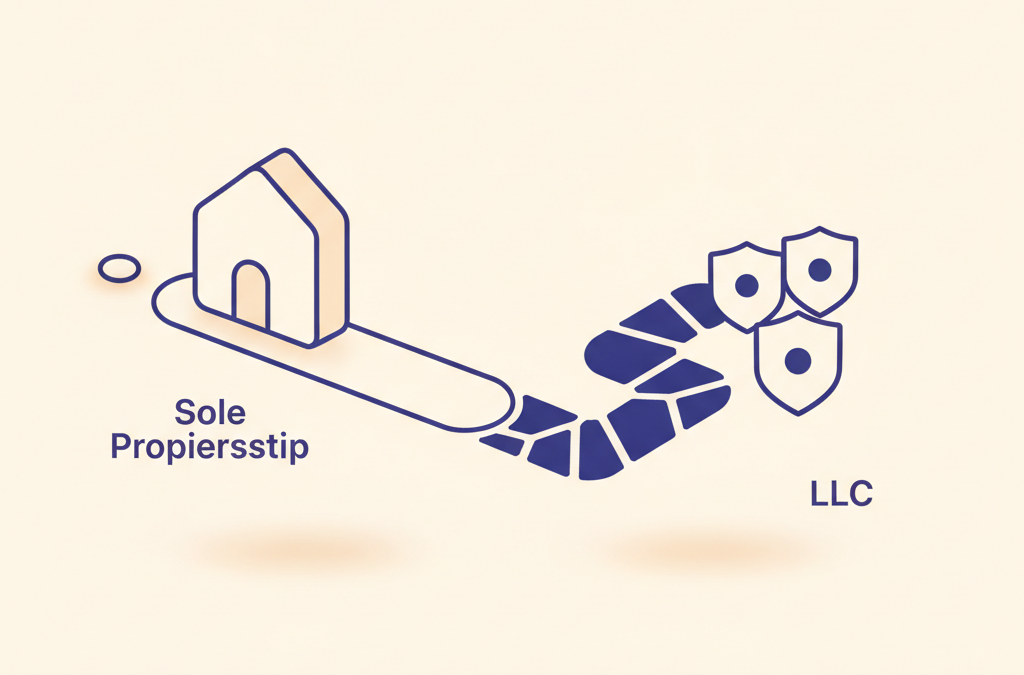
Quick answer
In the sole proprietorship vs LLC choice, a sole proprietorship is the simplest, cheapest way to run a business but gives no separation between you and the company. An LLC is a separate legal entity that can protect your personal assets, at the cost of more paperwork and fees. Confirm with a qualified professional.
One of the first real decisions a new owner faces is how to structure the business legally. For most people starting out, the choice comes down to two options: operate as a sole proprietor, or form a limited liability company, usually shortened to LLC. This is the classic sole proprietorship vs LLC decision, and the LLC vs sole proprietorship trade-off is worth understanding before you commit. They differ in a few important ways, and understanding those differences helps you ask the right questions, even though the final decision should be confirmed with a professional.
A quick but important caveat: this article explains the general concepts, not the specifics for your situation. Business law and tax treatment vary significantly by country and by state or region, and they change over time. Nothing here is legal or tax advice. Use it to understand the trade-offs, then talk to a qualified accountant or attorney before you file anything. This decision is one piece of the larger process of starting a small business.
What is a sole proprietorship?
A sole proprietorship is the simplest way to run a business. In most places, if you start selling on your own without forming a separate entity, you are automatically operating as one. There is little or no paperwork to create it, and the business is not legally separate from you. You and the business are, in the eyes of the law, the same person.
That simplicity is the main appeal. Setup is cheap or free, ongoing administration is minimal, and taxes are typically reported as part of your personal return rather than through a separate business filing. For someone testing an idea or running a small, low-risk operation, this low friction is genuinely valuable.
What is an LLC?
A limited liability company is a separate legal entity that you create by filing with the relevant authority and, usually, paying a fee. The defining feature is in the name: limited liability. Because the company is legally distinct from you, its debts and legal obligations generally belong to the company rather than to you personally. In many situations that separation can protect your personal assets, such as your home or personal savings, if the business is sued or cannot pay its debts.
That protection comes with more responsibility. There are formation costs, often ongoing fees or filings to keep the entity in good standing, and an expectation that you keep the company’s finances genuinely separate from your own. An LLC is not a magic shield; if you mix personal and business money carelessly, the protection can weaken. Treating the company as a real separate thing is part of the deal.
What is the core difference between them?
The single biggest difference is liability. Under a sole proprietorship, there is no legal wall between you and the business, so business risks are your personal risks. With an LLC, that wall exists, which is why owners in higher-risk activities, or those with personal assets to protect, often lean toward it.
The second difference is formality and cost. A sole proprietorship is cheap and nearly effortless to run. An LLC costs money to form and maintain and asks you to keep cleaner separation and records. The third difference, taxation, is more nuanced and depends heavily on your jurisdiction, which is exactly why it is a question for an accountant rather than a blog.
In plain terms: a sole proprietorship trades legal protection for simplicity, while an LLC trades some simplicity and cost for a layer of personal protection.
How do taxes differ, in general terms?
This is the area where general explanations are most likely to mislead, because tax rules are so location-specific. In broad strokes, a sole proprietor typically reports business income on their personal tax return, and the business itself is not taxed as a separate entity. An LLC’s tax treatment can vary; in some systems it is taxed similarly to a sole proprietorship by default, while in others it can elect different treatment.
Because the details determine real money, and because the rules differ so much by place, this is precisely the point where a short paid consultation with a qualified accountant pays for itself. They can tell you how each option would actually be taxed in your specific situation, which no general article can do responsibly.
Does an LLC affect how customers see you?
Owners sometimes assume forming an LLC will make the business look more credible, and there is a grain of truth to it, but the effect is usually small. Customers care far more about whether you solve their problem, deliver reliably, and communicate well than about the letters after your business name. A polished sole proprietorship will out-compete a sloppy LLC every time.
That said, some situations do lean on structure. Certain larger clients, suppliers, or partners prefer, or require, dealing with a registered company, and having a separate business bank account and clean paperwork can make those relationships smoother. If the customers you want to reach expect to work with a formal entity, that is a practical reason to consider one, quite apart from the liability question. Weigh it as one factor among several rather than the deciding one.
Which one is right for a new business?
There is no universal answer, but a few practical questions help you narrow it down. Think about them honestly, then confirm your reasoning with a professional.
- How much personal risk does the business carry? If your activity could realistically lead to being sued, or you take on significant debts or obligations, the liability protection of an LLC becomes more attractive.
- What personal assets would you want to protect? Someone with a home and savings has more to shield than someone just testing an idea in their spare time.
- How much complexity and cost can you handle right now? If you are validating whether the business works at all, the simplicity of a sole proprietorship lets you start cheaply and move fast.
- What are the rules and costs where you live? Formation and maintenance costs vary widely, and so do the tax implications, so local specifics matter a great deal.
Many people start as a sole proprietor to keep things simple while they validate demand, then form an LLC once the business is real, generating meaningful income, or taking on more risk. That path is common and reasonable, but it is not a rule. What matters is matching the structure to your actual level of risk and your appetite for cost and paperwork.
Can you change your structure later?
Yes. A structure is not a life sentence. Moving from a sole proprietorship to an LLC as the business grows is a well-trodden path, and it is often the sensible sequence: start simple, formalize once there is something worth protecting. Changing structure does involve some paperwork and, sometimes, tax considerations, so it is worth doing deliberately and with advice rather than on a whim.
The practical takeaway is not to let this decision paralyze you. Understand the core trade-off, liability protection versus simplicity and cost, make a reasonable choice for where the business is today, and revisit it as things change. Just make sure the final call is confirmed with a qualified professional who knows the rules where you operate, because this is one decision where the local details genuinely matter.
Frequently asked questions
What is the main difference between a sole proprietorship and an LLC?
Liability. A sole proprietorship has no legal wall between you and the business, so its debts and legal risks are yours personally. An LLC is a separate legal entity, so those obligations generally belong to the company, which can protect your personal assets.
Is an LLC always better than a sole proprietorship?
No. An LLC adds formation costs, ongoing fees or filings, and a duty to keep finances separate. A sole proprietorship is cheaper and simpler, which suits low-risk businesses and early testing. The right choice depends on your risk, your assets, and local rules.
Can I switch from a sole proprietorship to an LLC later?
Yes. Starting simple and forming an LLC once the business is generating real income or taking on more risk is a common path. Changing structure involves some paperwork and possible tax considerations, so do it deliberately and with professional advice.
Does forming an LLC change how I am taxed?
Possibly, and it depends heavily on your jurisdiction. In some systems an LLC is taxed much like a sole proprietorship by default, while in others it can elect different treatment. Because the details determine real money, confirm your specific situation with a qualified accountant.
Will an LLC make my business look more credible?
The effect is usually small. Customers care far more about whether you solve their problem and deliver reliably than about your business structure. Some larger clients or partners do prefer working with a registered entity, which can be a practical reason to consider one.
Related

Best Password Managers 2026: How to Choose One
The best password manager in 2026: how they work, why they are safe, and the features - zero-knowledge encryption, sync, a strong…

How to Build an Emergency Fund, Step by Step
How to build an emergency fund step by step: what it is, how large it should be, where to keep it, and…

How to Sleep Better: An Evidence-Based Guide
How to sleep better: the everyday habits around light, timing, caffeine, routine and movement that support rest. General wellness info, not medical…