What Is an AI Agent? A Plain-English Explainer
What is an AI agent? A plain-English guide to what agents genuinely can and cannot do in 2026, how they differ from chatbots, and how to see past the hype.
Quick answer
An AI agent is software that pursues a goal across several steps with some autonomy, using tools and taking actions rather than just answering like a chatbot. Agents genuinely help with constrained, checkable, multi-step tasks, but in 2026 they are not reliable autonomous workers, so keep a human in the loop for anything that matters.
“AI agent” is the phrase of the moment, stamped on product launches, pitch decks, and breathless headlines. It is also one of the most slippery terms in technology, used to mean everything from a genuinely autonomous system to a slightly fancier chatbot. If you have felt that everyone is talking about agents while no one quite explains what one is, this guide is for you. We will define the term in plain language, separate what agents can really do today from the marketing, and help you judge whether the “agent” in any given product is substance or spin.
This is a companion to the practical guide to AI tools, which covers the wider landscape. Here we zoom in on the one category most surrounded by hype, because understanding it protects you from both over-excitement and needless worry.
What is an AI agent, in plain terms?
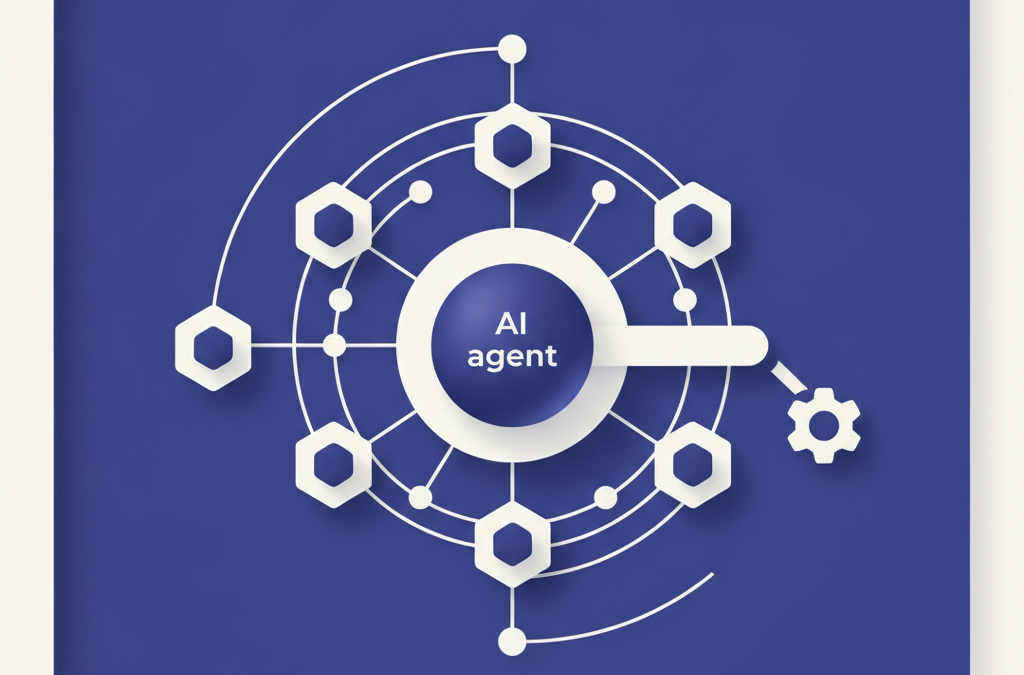
Start with the contrast. A normal chatbot answers. You ask a question, it responds, and the exchange ends there. An agent is meant to act. Rather than just producing text, it is designed to take a goal, break it into steps, and carry those steps out — potentially using other tools along the way — with less step-by-step direction from you.
A useful mental model: a chatbot is like asking a knowledgeable friend for advice, while an agent is like handing an assistant a task and letting them go do it. “Draft me an email” is a chatbot request. “Find three suppliers, compare their prices, and put the results in a document” is the kind of multi-step job an agent is meant to handle by itself. The defining feature is autonomy across several steps toward a goal, not a single answer.
How is an agent different from a regular chatbot?
The line can blur, but a few characteristics distinguish something worth calling an agent:
- Multiple steps: it plans and executes a sequence rather than producing one reply.
- Tool use: it can call on other capabilities — searching the web, running a calculation, filling a form, using a software function — not just generate language.
- A degree of autonomy: it decides what to do next based on results so far, rather than waiting for you to prompt each move.
- A goal, not a question: you give it an outcome to achieve and let it work out the path.
Many products marketed as agents only have some of these traits. A chatbot that can also do a web search is not really an agent; it is a chatbot with a tool. That distinction matters when you are trying to judge whether a product’s “agent” label is meaningful or just fashionable.
What can AI agents actually do today?
Here honesty matters, because the gap between the pitch and the reality is wide. Agents genuinely can handle certain constrained, well-defined, multi-step tasks — the kind where the steps are fairly predictable and a mistake is easy to catch or reverse. Research assistance, drafting and organizing information, and moving data between simple tools are areas where they show real, if uneven, usefulness.
What they are not, in 2026, is a reliable autonomous worker you can hand an open-ended, high-stakes job and walk away from. On longer or more ambiguous tasks, small errors compound: a wrong assumption in step two quietly derails steps three through ten, and because the system states each step confidently, the failure is not always obvious until the end. The technology is real and improving, but the fully autonomous digital employee remains more promise than product.
Why is there so much hype around agents?
The excitement is not baseless. If agents worked as advertised, they would automate whole categories of knowledge work, which is an enormous prize, so the incentive to promote them is huge. Every company wants to be seen leading this shift, and “agent” has become a label that signals being at the frontier.
That incentive is exactly why you should read the word skeptically. When a product calls itself agentic, the interesting question is not whether it uses the label but what it actually does when you give it a real task. The hype runs ahead of the reliability, and the demos — always chosen to succeed — rarely show the messier average case. None of this means agents are fake; it means the marketing is currently well ahead of the day-to-day experience.
What should I watch out for with agents?
Because an agent takes actions rather than just suggesting them, the stakes of a mistake are higher than with a chatbot. A few sensible cautions:
- Give it reversible tasks. Let an agent do things that are easy to undo or check, not actions with permanent consequences like sending money or deleting data.
- Keep a human checkpoint. The safest pattern is an agent that proposes a plan or a result for your approval before anything irreversible happens.
- Watch the permissions. An agent that can act on your behalf may ask for access to your accounts, files, or tools. Grant the minimum it needs, and be cautious about handing broad control.
- Remember it can be confidently wrong. The same tendency to state false things fluently that affects chatbots affects agents, except now the errors turn into actions, not just sentences.
Treat an agent like a capable but unproven new assistant: useful, worth trying, but not yet someone you give the keys to everything.
How do I tell a real agent from a rebranded chatbot?
When a product waves the agent flag, ignore the label and ask practical questions. Does it actually take multiple steps on its own, or just answer? Can it use tools and act, or only generate text? What happens when a step fails partway through — does it recover, or quietly produce nonsense? What permissions does it want, and what can it do without asking you? The answers tell you far more than the marketing.
A quick test is to give it a small, real, multi-step task and watch how it behaves, especially where things get ambiguous. Genuine agent capability shows up in how it handles the messy middle of a task, not in a polished demo of the happy path.
What does an agent doing a task actually look like?
To make this concrete, imagine you ask an agent to “put together a shortlist of three coworking spaces near me, with prices and opening hours, in a document.” A capable agent would break that into steps: search for coworking spaces in your area, visit or look up each candidate, extract the price and hours, compare them, and assemble the findings into a formatted document — checking its own progress as it goes.
Now notice where it can go wrong. If one listing is outdated, the agent may record a stale price without flagging it. If a site is hard to read, it might guess. Because each step is stated confidently, you may not spot the bad data until you rely on it. That is why the honest advice is to use agents for tasks like this — genuinely helpful, clearly multi-step — while still glancing over the result rather than trusting it blind. The value is real; the supervision is still yours.
What is the honest takeaway?
An AI agent is software meant to pursue a goal across multiple steps with some autonomy, using tools and acting rather than only answering. The concept is real and genuinely promising, and agents are already useful for constrained, checkable, multi-step tasks. But in 2026 the marketing is well ahead of the reliability, so the sensible stance is curious and cautious: try them on low-stakes, reversible work, keep a human in the loop for anything that matters, and judge each “agent” by what it does, not by what it is called. Understood that way, agents are neither magic nor a threat — just a promising, still-maturing tool.
Frequently asked questions
What is an AI agent in simple terms?
An AI agent is software meant to pursue a goal across multiple steps with some autonomy, using other tools and taking actions rather than just answering. A chatbot answers a question; an agent takes a task, breaks it into steps, and carries them out — like handing an assistant a job rather than asking a friend for advice.
How is an AI agent different from a chatbot?
A chatbot produces a single reply. An agent plans and executes a sequence of steps, can use tools like web search or software functions, decides what to do next based on results, and works toward a goal rather than answering one question. A chatbot that can also search the web is a chatbot with a tool, not a true agent.
Can AI agents actually do useful work today?
Yes, for constrained, well-defined, multi-step tasks where steps are predictable and mistakes are easy to catch or reverse — research help, drafting and organizing information, moving data between simple tools. They are not yet a reliable autonomous worker for open-ended, high-stakes jobs, because small early errors compound across later steps.
Are AI agents safe to use?
Use them carefully because they take actions, not just suggest them. Give agents reversible tasks, keep a human checkpoint before anything irreversible, grant the minimum permissions they need, and remember they can be confidently wrong — except now the errors become actions rather than just sentences.
How do I tell a real agent from a rebranded chatbot?
Ignore the label and ask what it does: does it take multiple steps on its own, use tools and act, and recover when a step fails? Give it a small, real, multi-step task and watch how it handles the ambiguous middle. Genuine agent capability shows there, not in a polished demo.
Related

How to Paint a Room Properly: A Step-by-Step Guide
Learn how to paint a room properly, from estimating how much paint you need to prepping walls, taping crisp edges, priming, cutting…
SSD vs HDD: Which Should You Buy?
SSD vs HDD explained: how solid-state and hard drives really differ, why one feels instant, and which to buy for speed or…
How to Do Keyword Research: A Practical Guide
How to do keyword research the practical way: find, judge and group the phrases your audience searches with free tools, so a…