DIY or Hire a Pro: A Homeowner Decision Guide
How to decide DIY or hire a pro for each home job, judging danger, the cost of a mistake, your skills, and permits, with clear lists of safe and pro-only tasks.
Quick answer
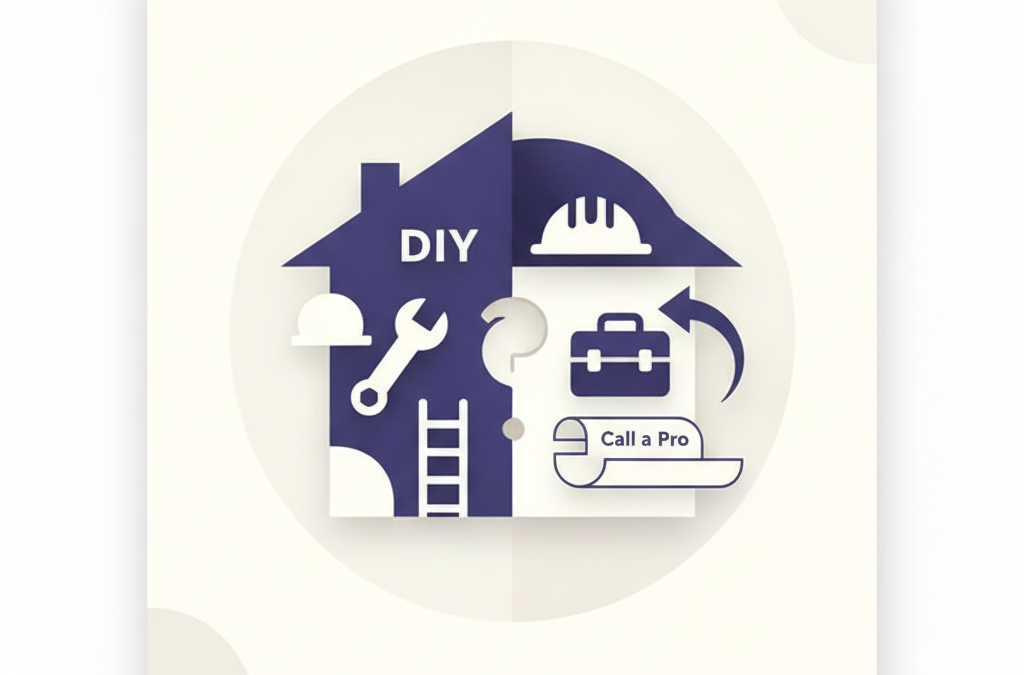
Whether to DIY or hire a pro comes down to risk, not just cost. Cosmetic and routine tasks like painting, patching, and unclogging drains are safe to DIY. Always hire licensed pros for electrical panels, gas, furnace internals, major plumbing, roof work, and structural changes, where a mistake can cause fire, flooding, or injury.
One of the most valuable skills a homeowner can develop is not any particular repair, but the judgment to know which jobs to take on and which to hand to a professional. Do too little yourself and you spend money on tasks you could easily handle. Take on too much and you risk injury, damage, or a repair that costs far more to fix than it would have to do right the first time. Getting this decision right, whether to DIY or hire a pro, saves money, time, and occasionally a great deal of trouble.
What should guide the decision?
Before starting any job, it helps to run through a few honest questions. The answers usually make the right choice obvious.
- Is it dangerous? Does the task involve electricity, gas, structural elements, or working at height? Danger to your safety is the first and most important filter.
- What happens if I get it wrong? A crooked shelf is annoying; a botched plumbing or electrical job can flood or burn down a house. Weigh the worst realistic outcome.
- Do I have the skills and tools? Be truthful about your experience and whether you own or can rent what the job needs.
- Is a permit or inspection required? Many jurisdictions require permits for electrical, plumbing, and structural work, and doing it without one can cause problems with insurance and resale.
- Is it worth my time? Even a doable job may not be worth the hours if a professional can do it quickly and affordably.
Which jobs are genuinely safe to do yourself?
Plenty of home tasks are well within reach of a careful beginner and are a good way to build confidence and skill. Cosmetic and low-risk maintenance jobs rarely go badly wrong, and even a mistake is usually easy to correct.
Painting walls, filling small holes, and basic patching are approachable and forgiving. So are hanging pictures and shelves, assembling furniture, and swapping out cabinet or door hardware. Simple plumbing tasks like unclogging a drain with a plunger or snake, replacing a toilet flapper, or fixing a running toilet are beginner-friendly. Routine maintenance such as changing HVAC filters, cleaning gutters from a stable ladder, testing detectors, caulking, and weatherstripping is exactly the kind of work homeowners should own. Replacing a like-for-like light fixture or a faucet is achievable for many people who take their time and follow instructions carefully.
A good rule of thumb: if the worst outcome of a mistake is a cosmetic flaw or a task you have to redo, it is usually safe to attempt. If the worst outcome is fire, flooding, injury, or structural failure, treat it as a professional job.
Which jobs almost always need a professional?
Some categories of work carry enough risk that they belong to licensed, insured professionals nearly every time, regardless of how confident you feel. The danger is not just to you in the moment but to everyone who lives in the house afterward.
Why is electrical work so risky?
Electrical work beyond the simplest swaps should go to a licensed electrician. Replacing a light fixture or a like-for-like switch or outlet with the power off is within reach for many people, but anything involving your electrical panel, adding new circuits, moving wiring, or dealing with older or aluminum wiring is not a place to learn on the job. Mistakes cause electrocution and house fires, and much of this work legally requires permits and inspection. If you are ever unsure whether a circuit is safely off, that uncertainty is itself a reason to call a professional.
What about gas and heating systems?
Anything involving natural gas is off-limits for do-it-yourself work, full stop. Gas leaks cause explosions and carbon monoxide poisoning. If you ever smell gas, leave the house and call your gas utility or emergency services from outside rather than investigating yourself. Similarly, the internal workings of furnaces and the sealed refrigerant systems of air conditioners belong to trained HVAC technicians. You can change filters and clear debris from around the equipment, but you should not open it up.
When is plumbing a professional job?
Minor plumbing is DIY-friendly, but major plumbing is not. Rerouting pipes, work on the main water or sewer line, installing new plumbing, or anything involving a water heater’s gas or heating elements should go to a plumber. Water damage from a mistake is expensive and spreads fast, and some plumbing work requires permits. The line runs roughly between fixing what is there, which is often doable, and changing the system itself, which usually is not.
What about structural and roof work?
Anything that affects the structure of your home, such as removing walls, altering load-bearing elements, or major work on the foundation, needs a professional and often an engineer’s input, because a mistake can compromise the whole building. Roof work is both a fall risk and a place where errors lead to leaks and rot, so leave anything beyond a ground-level inspection to roofers with proper equipment.
How do you weigh cost against risk?
It is tempting to see do-it-yourself as always cheaper, but the full picture includes the cost of tools, the value of your time, and the price of fixing a mistake. A professional brings experience, the right tools, insurance, and often a warranty on their work. For a one-off job that needs an expensive specialized tool, hiring out or renting the tool can be the economical choice. For a task you will repeat many times, learning to do it yourself and buying the tool pays off.
There is also the matter of permits and insurance. Unpermitted electrical or structural work can create problems when you sell the home or file an insurance claim, which can dwarf any money you saved. When a permit is required, that is usually a sign the job is serious enough to involve a professional, or at least to do strictly by the book.
How do you find and work with a good professional?
When you decide to hire out, a little diligence protects you. Seek recommendations, check that the tradesperson is properly licensed and insured for the work, and get more than one written estimate for larger jobs so you understand the fair range. Be wary of anyone who pressures you into an immediate decision or asks for full payment up front. A clear written scope of work and agreement protects both sides. Treating professionals with respect and paying fairly also tends to get you better service and a relationship you can call on next time.
What if you start a job and get stuck?
Sometimes a task that looked simple turns out to be more than you expected once it is opened up. There is no shame in stopping. The mark of good judgment is recognizing when you are out of your depth before you make things worse, not pushing on to avoid admitting it. If you hit wiring you do not understand, a pipe that will not seal, or a repair that keeps failing, put the job in a safe state, stop, and call a professional. A partially finished job that a tradesperson can pick up cleanly is far cheaper to resolve than damage caused by forcing something. Knowing when to hand off mid-task is as valuable as knowing not to start.
What is the sensible overall approach?
Build your skills on the safe, forgiving jobs, and be honest and unembarrassed about calling professionals for the dangerous ones. There is no glory in a hospital visit or a house fire to save the cost of an electrician. The most capable homeowners are not the ones who do everything themselves; they are the ones who know exactly where their limits are and make deliberate choices on each job. Doing the routine care yourself and hiring out the high-risk work is not a compromise, it is the smart strategy. For a season-by-season view of the maintenance you can confidently own, see our complete seasonal home maintenance checklist.
Frequently asked questions
How do I decide whether to DIY or hire a pro?
Ask whether the job is dangerous, what happens if you get it wrong, whether you have the skills and tools, and whether a permit is required. If the worst outcome is cosmetic, it is usually safe to try; if it is fire, flooding, injury, or structural failure, hire a professional.
Which home repairs are safe to do myself?
Painting, filling holes, hanging shelves, assembling furniture, unclogging drains, fixing a running toilet, changing HVAC filters, cleaning gutters from a stable ladder, caulking, and swapping like-for-like fixtures are all beginner-friendly and forgiving.
What jobs should always go to a professional?
Electrical work beyond simple swaps, anything involving gas, the internals of furnaces and air conditioners, major plumbing and sewer or water-line work, roof work beyond a ground inspection, and structural changes to the home.
Is doing it myself always cheaper?
Not always. Factor in tools, your time, and the cost of fixing mistakes. For a one-off job needing an expensive specialized tool, hiring out or renting can be cheaper, and unpermitted work can cost far more at resale or on an insurance claim.
Related

What Is a Credit Score and How Does It Work?
What is a credit score? A clear guide to what it is, how it works, the factors that shape it, and how…

Digital Declutter: A Calmer Phone and Desktop
A digital declutter clears the invisible noise draining your focus. Quiet your phone, tame your inbox, and clear your desktop without quitting…

How to Read More Books Without Forcing It
How to read more books is not about willpower or yearly targets. It is about removing friction, reclaiming pockets of time, and…