Content Marketing vs Paid Ads: Which Should You Choose?
Content marketing vs paid ads: a hype-free comparison of how fast each works, what they cost, what happens when you stop, and why most strategies use both.
Quick answer
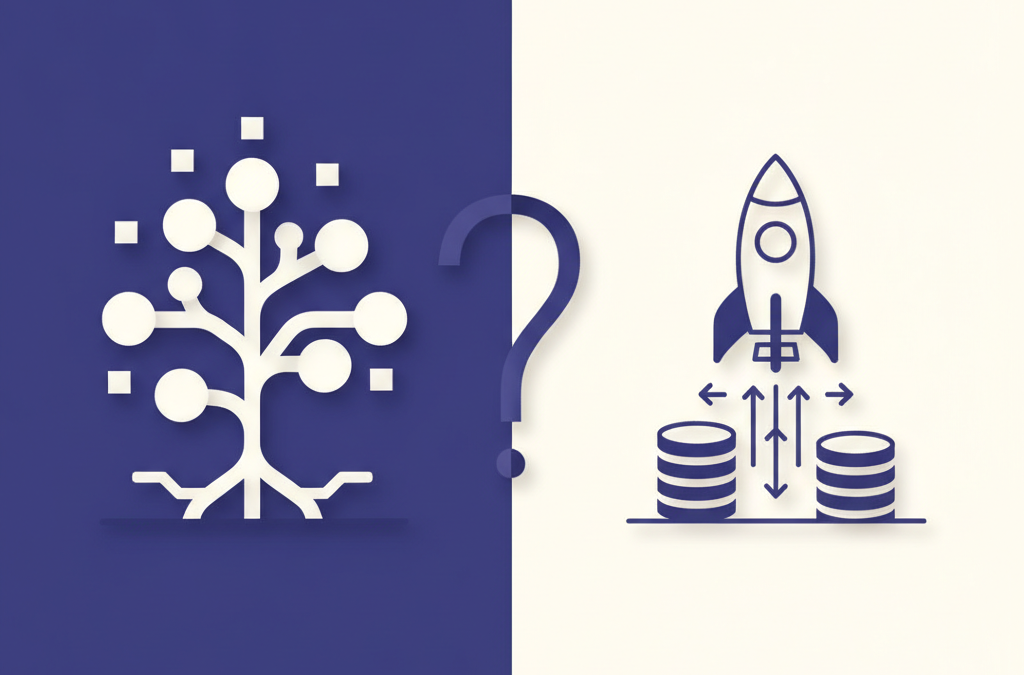
Content marketing vs paid ads comes down to earned versus bought attention. Content builds slowly into a durable asset that keeps working for years with no further spend, while paid ads deliver instant traffic that stops the moment you stop paying. Neither wins outright; most strong strategies eventually use both.
Sooner or later, anyone trying to grow an audience faces the content marketing vs paid ads question: should you invest in content marketing, which earns attention slowly, or paid advertising, which buys it instantly? The honest answer is that they are different tools for different jobs, and framing it as a war between them leads to bad decisions. This guide compares them plainly so you can choose based on your situation rather than someone else’s sales pitch.
Both channels work best on a solid foundation, so if you have not yet, it is worth reading the beginner’s guide to SEO to see where organic content fits in the wider picture.
What is the core difference between the two?
Content marketing is the practice of creating genuinely useful material, articles, guides, videos, that attracts and keeps an audience over time. Its traffic is largely earned and organic: people find your work through search or word of mouth, and you do not pay per visitor.
Paid advertising is renting attention. You pay a platform to place your message in front of people, and the moment you stop paying, the visibility stops. Search ads, social ads, and display ads all work this way. Neither approach is inherently better; they simply behave very differently, and understanding that difference is the key to using each well.
How fast does each one work?
This is the starkest contrast. Paid ads are fast. You can set up a campaign today and have visitors arriving within hours. That makes advertising uniquely suited to situations where you need results now: a time-limited launch, a seasonal push, or a test of whether an offer resonates before you invest further.
Content marketing is slow. A new article might take months to climb the rankings and start pulling in steady traffic, especially on a young site. That lag frustrates people expecting quick wins, and it is why so many give up too early. But the slowness is not a flaw so much as the price of an asset that keeps working long after you build it.
What happens when you stop?
Here is the difference that matters most over the long run. When you stop paying for ads, your traffic drops to essentially nothing almost immediately. Advertising is a tap: on when you pay, off when you do not. There is no residual value once the budget runs out.
Content behaves like an asset. A well-made guide that ranks can bring in readers for years with no additional spend. You do the work once and reap the benefit repeatedly. That compounding quality is why content, despite its slow start, often becomes far cheaper per visitor than advertising over time. The catch is that you have to survive the slow start to get there.
Which one costs more?
The cost comparison is not as simple as free versus paid. Content marketing has no direct media cost, but it is expensive in time and effort. Researching, writing, and maintaining good content is real work, whether you do it yourself or pay someone. It is not free; the cost is just measured in hours rather than ad spend.
Advertising has a clear, direct cost per click or per impression, and in competitive markets that cost can be steep. Its advantage is predictability and control: you know what you are spending and can turn it up or down instantly. Its disadvantage is that the meter never stops. Think of content as buying an asset and advertising as paying rent, and the trade-off becomes clear.
Which gives you more control?
Advertising wins decisively on control and precision. You choose exactly who sees your message, when, and where, and you can measure the result down to individual clicks and conversions. If you need to reach a specific audience with a specific offer at a specific time, ads let you do that with a precision organic content cannot match.
Content marketing is less controllable. You cannot dictate when a page will rank or exactly who will find it, and search visibility can shift with algorithm updates. You are, to a degree, subject to forces outside your hands. The upside is that the trust earned through helpful content tends to run deeper than the attention bought through an ad, because the audience came to you willingly.
When should you lean on paid ads?
Advertising makes the most sense when speed and precision are the priority. If you are launching something with a deadline, testing whether a new product or message resonates, promoting a time-sensitive event, or need to reach a narrow audience quickly, ads are the right tool. They are also useful for jump-starting visibility while your slower organic efforts are still maturing.
The key discipline with ads is to know your numbers. Because you pay per visitor, advertising only works long-term if what you sell earns back more than the ads cost. Without that math, ad spend becomes a leak. Treat every campaign as a measured experiment, not a permanent expense you set and forget.
When should you lean on content?
Content marketing is the better bet when you are building something for the long haul and can afford to be patient. If you want a durable stream of traffic that does not vanish when a budget runs out, if you are establishing expertise and trust in a field, or if your margins do not support paying for every visitor, content is the sustainable path.
It is also, frankly, the more accessible option for someone with more time than money, which describes most people starting out. You cannot outspend established competitors on ads, but you can often out-teach them with better, more honest content aimed at the specific questions they neglect.
Can you use both together?
You can, and the smartest approach usually does. The two channels complement each other well. Ads can drive immediate traffic to a new piece of content while it waits to rank organically. Content gives your ads somewhere valuable to send people, which improves how well those ads convert. And the audience insights you gain from running ads, which messages land, which audiences respond, can sharpen the content you create.
A sensible starting sequence for a small operation is to build a foundation of genuinely useful content first, since it is the asset you will own, then use paid ads selectively and measurably for specific pushes where speed matters. Let each do the job it is actually good at, and stop treating the choice as either-or.
How do you measure each one fairly?
The two channels demand different scorecards, and judging one by the other’s metrics leads to bad calls. Advertising is measured over short windows and in direct terms: what did you spend, how many clicks or conversions did it produce, and did the revenue exceed the cost? Because the feedback is fast, you can test, adjust, and either scale a winning campaign or shut off a losing one within days.
Content resists that kind of quick accounting, and trying to force it there is where people give up prematurely. A piece of content might show almost nothing for months, then quietly become a steady source of traffic and trust for years. Its return has to be judged over the long term and across your whole library, not article by article in the first few weeks. The honest way to compare them is to accept that ads answer “did this campaign pay off now” while content answers “is this asset compounding over time”, and to hold each to its own reasonable timeline.
What is the biggest risk with each?
Every tool has a failure mode worth naming. The classic way to waste money on ads is to run them without watching the numbers, letting spend continue on campaigns that never earn their cost back, or sending paid traffic to a weak page that fails to convert. Ads punish inattention quickly and expensively.
The classic way to waste effort on content is to give up right before it would have worked, abandoning the slow build just as a site is about to gain traction, or to produce large volumes of shallow content that never ranks because it is not genuinely better than what exists. Content punishes impatience and corner-cutting. Knowing each channel’s characteristic mistake makes it much easier to avoid.
So which should you choose?
If you are forced to pick one to start, the answer usually comes down to your constraints. Short on time but with a budget and a clear offer that earns its keep? Ads can get you moving quickly. Short on money but able to invest effort consistently over months? Content will build you something that lasts. Most durable growth eventually uses both, but there is no shame in starting with whichever fits your situation, as long as you go in with clear eyes about how each one actually behaves.
Frequently asked questions
Is content marketing or paid advertising better?
Neither is better outright; they do different jobs. Content marketing builds a durable, compounding asset over months, while paid ads deliver instant but temporary traffic. The right choice depends on your timeline, your budget, and how quickly you need results.
Is content marketing cheaper than paid ads?
Over time, usually yes. Content has no media cost but takes real time and effort to produce. Paid ads carry a clear cost per click that never stops. Content often becomes far cheaper per visitor once it ranks, but only after a slow start.
How long does content marketing take to work?
Typically months, especially on a new site, before an article climbs the rankings and pulls steady traffic. Paid ads work within hours. That lag is why many people quit content too early and miss the compounding payoff.
Can you use content marketing and paid ads together?
Yes, and the smartest strategies usually do. Ads can drive immediate traffic to new content while it waits to rank, and content gives your ads a valuable destination that converts better. Let each do the job it is best at.
What happens to traffic when you stop paying for ads?
It drops to almost nothing right away, because advertising is rented attention. Content behaves like an owned asset: a guide that ranks can keep bringing in readers for years with no further spend.
Related
What Is CTR (Click-Through Rate)?
What is CTR? Click-through rate is the percentage of people who click after seeing your link or ad. Learn how to calculate…

How to Price Your Product or Service Without Guessing
How to price a product without guessing: work out your true cost to deliver, weigh the value to the customer, and set…

How to Sleep Better: An Evidence-Based Guide
How to sleep better: the everyday habits around light, timing, caffeine, routine and movement that support rest. General wellness info, not medical…